
Stock vs. Custom Glass Bottles: Which Is Right for Your Brand?
Understand the critical differences between stock and custom glass packaging to make a commercially sound decision based on your brand's timeline, budget, and strategic goals.
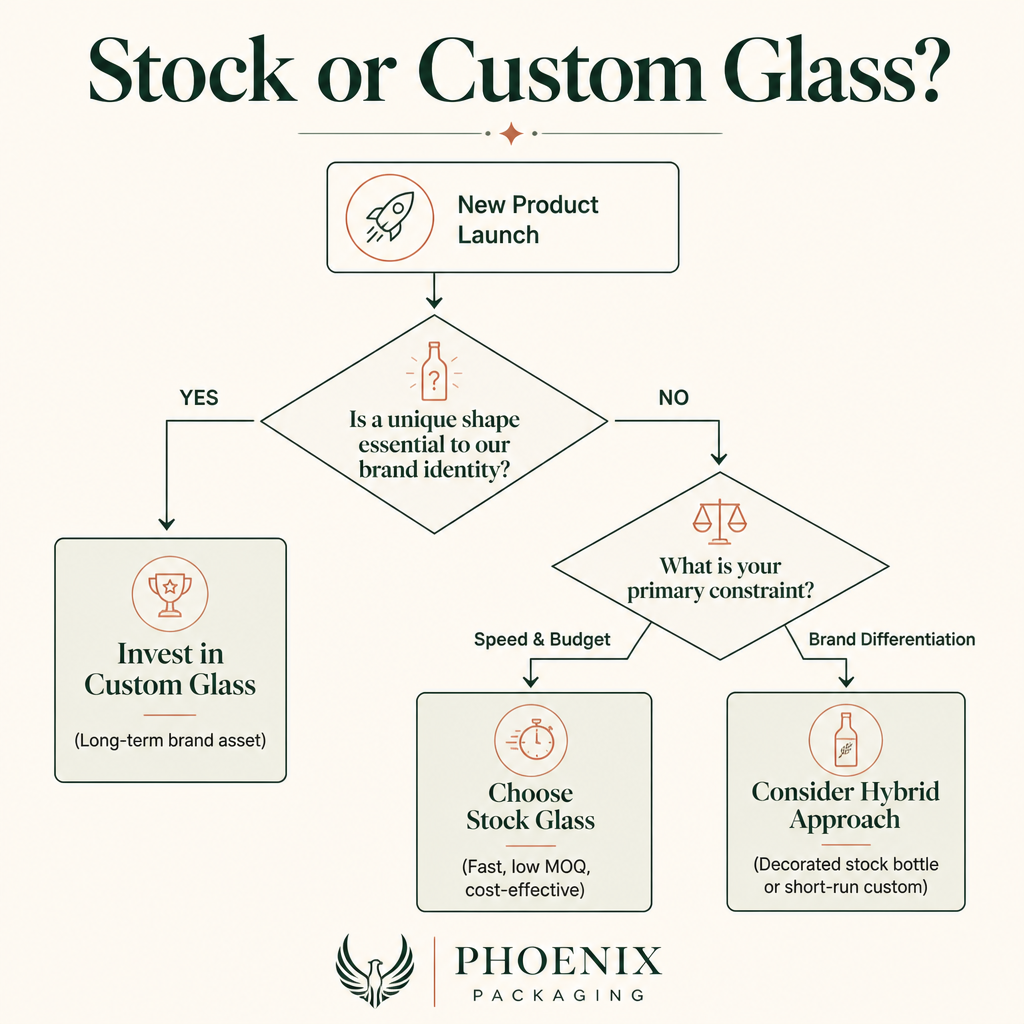
Stock glass bottles are ideal for speed, lower costs, and smaller volumes, making them suitable for market testing or budget-conscious launches. Custom glass bottles provide a unique brand identity and competitive advantage but require more investment, longer lead times, and larger minimum order quantities (MOQs). The right choice depends on your brand strategy, budget, and time-to-market priorities. For many brands, starting with a stock bottle and planning for a future custom design offers a balanced approach to growth.
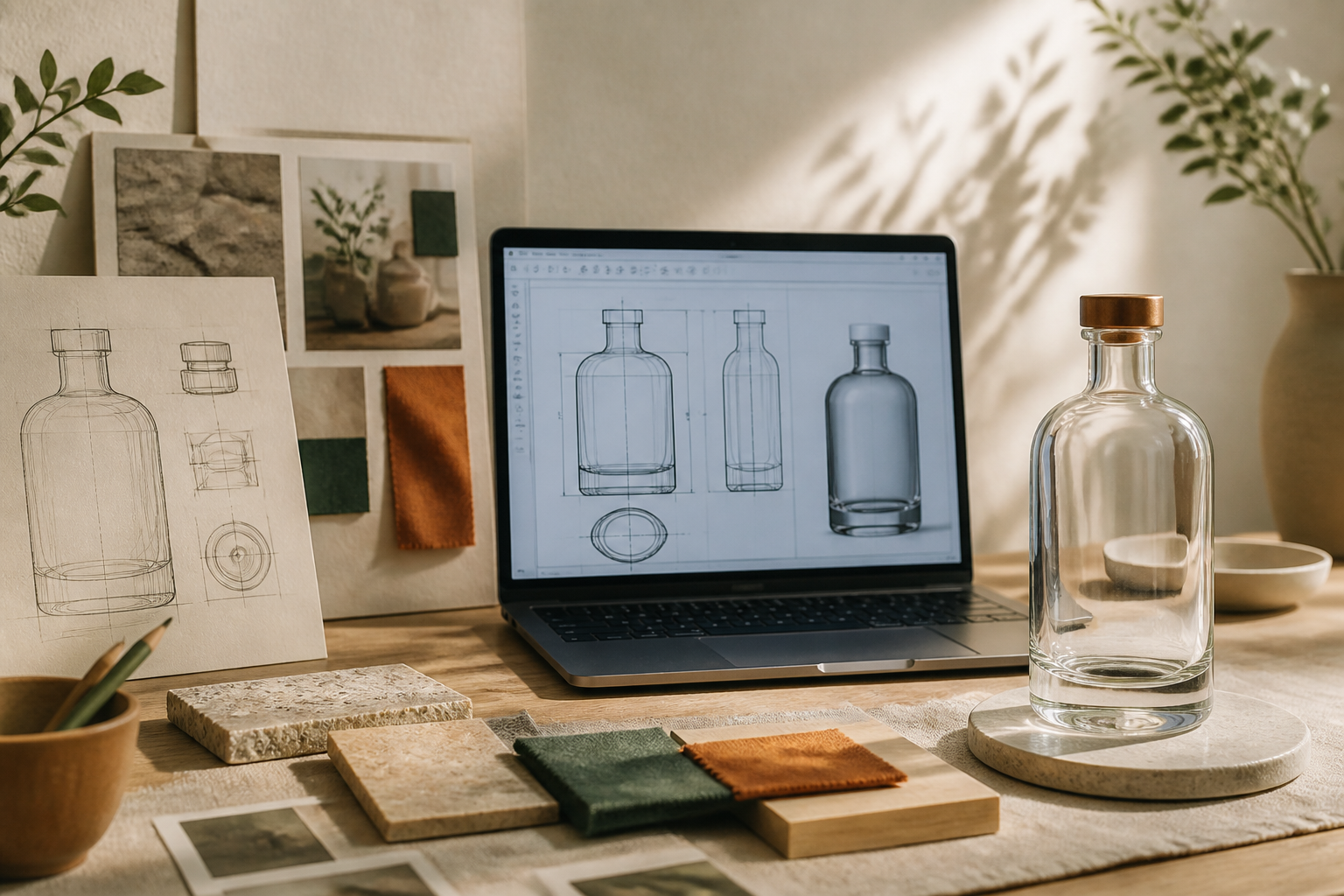
The decision between stock and custom glass packaging hinges on a core trade-off: speed and cost-efficiency versus brand equity and market differentiation. Stock options allow for rapid deployment with minimal upfront capital, while custom options create a proprietary asset that can define a brand's presence on the shelf and protect it from imitation.
- Stock is a strong fit if: Your primary goals are speed to market, testing a new product concept, or managing cash flow with lower MOQs and no mould investment.
- Custom is a strong fit if: Building long-term brand equity is the priority, your product requires a unique shape for functional or aesthetic reasons, and you can accommodate a longer development timeline and higher upfront investment.
Key Differences: At a Glance
Understanding the fundamental differences in process, cost, and timing is essential for planning your product launch. While both pathways result in high-quality, recyclable glass packaging, the journey to get there is distinct. The following table summarises the main commercial and operational considerations.
| Feature | Stock Glass Bottles | Custom Glass Bottles |
|---|---|---|
| Mould Investment | None. The mould exists and is owned by the manufacturer. | Significant upfront cost for design, engineering, and manufacturing of a proprietary mould. |
| Minimum Order Quantity (MOQ) | Generally lower, offering more flexibility for new or small-scale products. | Typically higher, as production runs must justify the custom mould setup. |
| Lead Time | Shorter. Based on existing inventory and production schedules (weeks to a few months). | Longer. Involves design, sampling, testing, and mould creation before production (several months). |
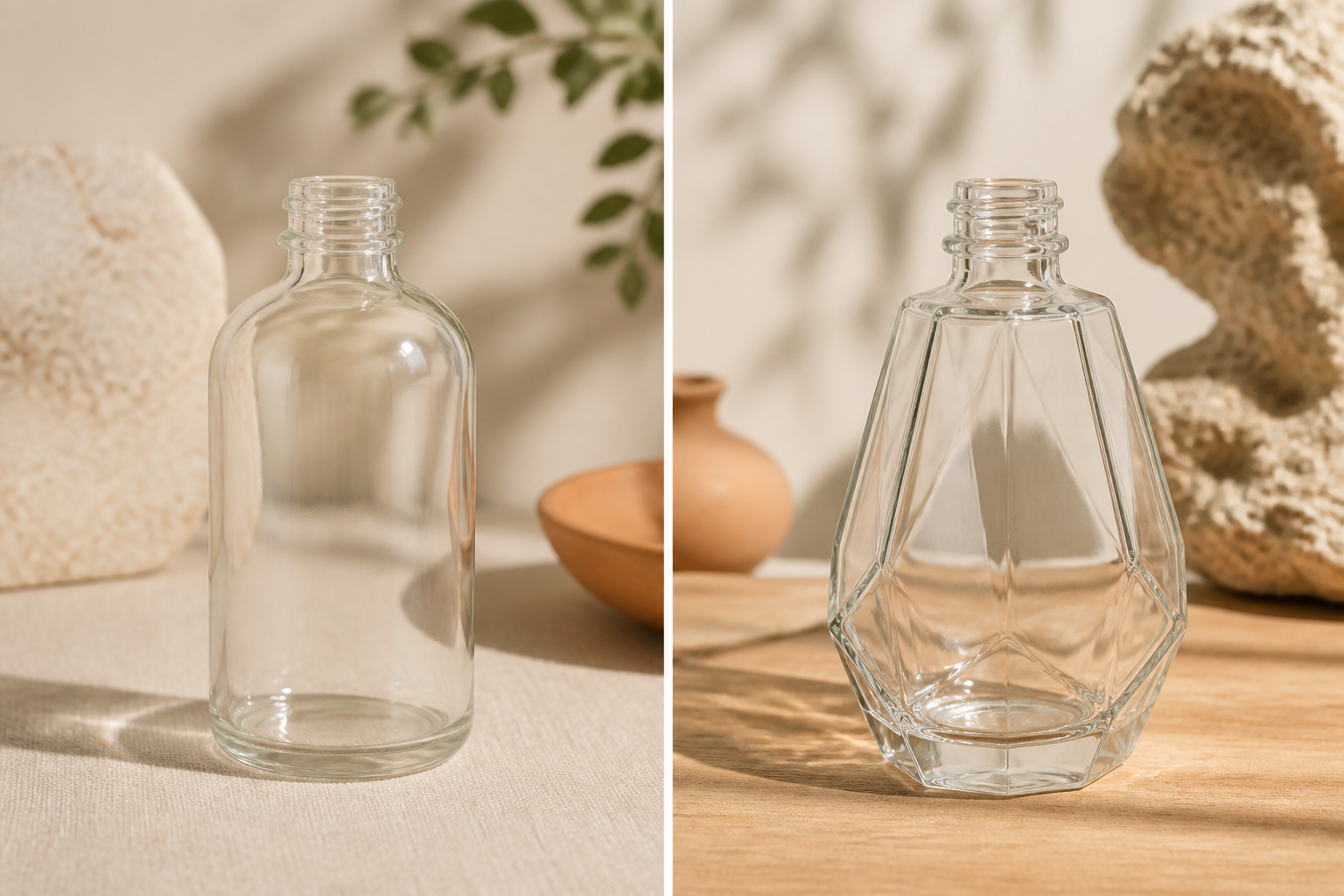
| Design Uniqueness | Limited. Shape is shared with other brands, but can be differentiated with closures, labels, and decoration. | Exclusive. The bottle shape is a unique brand asset, offering maximum shelf impact and brand recognition. |
| Unit Cost | Often lower at smaller volumes due to amortised mould costs and larger production runs. | Can become cost-competitive or even cheaper at very high volumes, but the initial mould cost must be amortised. |
| Brand Protection | Minimal. Competitors can easily use the same bottle. | Strong. A unique design is difficult and costly for others to replicate, protecting your brand identity. |
When to Choose Stock Glass Bottles
Opting for stock glass bottles is a strategic commercial decision, not a compromise on quality. It is the most direct path to getting your product onto shelves. This route is ideal for start-ups validating a product, established brands launching seasonal or limited-edition lines, or any business where managing inventory and cash flow is paramount.
While the bottle shape itself is not exclusive, significant differentiation can be achieved through other packaging elements. A well-chosen closure, innovative label design, and high-quality surface finishes can transform a standard bottle into a premium product. As an end-to-end partner, Phoenix helps you coordinate all these elements—bottle, closure, and secondary packaging—into a cohesive and market-ready solution.
When to Invest in Custom Glass Bottles
Investing in a custom glass bottle is about creating a tangible brand asset. A proprietary shape becomes synonymous with your product, creating an immediate visual shortcut for consumers in a crowded retail environment. This is a powerful long-term strategy for building brand equity and defending market share. According to FEVE, the European Container Glass Federation, glass's premium image and design flexibility help brands stand out.
A custom design can also offer functional advantages. You can engineer the bottle to optimise product dispensing, improve grip and ergonomics, or enhance performance on a specific bottling line. The process is a significant undertaking, but the result is a piece of packaging that is uniquely and wholly yours.
Quality Assurance for Both Pathways
Regardless of whether you choose a stock or custom solution, quality assurance is non-negotiable. Glass packaging for food and beverage products must be safe, strong, and reliable. At Phoenix, our commitment to quality is the same for every bottle we supply.
Our certified partner plants operate under stringent quality management systems, including ISO 9001 and food-safety standards like FSSC 22000. Each batch of bottles undergoes rigorous testing, including AQL inspection, precision camera inspection for defects, and physical tests for thermal shock, pressure, and impact resistance. This ensures that your packaging, whether stock or custom, protects your product and represents your brand impeccably. Explore our full suite of quality assurance capabilities.
Ready to Plan Your Next Launch?
Whether a stock solution or a custom design is the right fit, our team can help you navigate the options. We provide end-to-end support, from bottle selection to closure compatibility and quality assurance.
Sources used in this article
- 1
- 2
Frequently asked questions
What is the typical minimum order quantity (MOQ) for custom glass bottles?

MOQs for custom glass bottles vary significantly based on the manufacturer and bottle size, but they are typically higher than for stock bottles to justify the production changeover. However, Phoenix specialises in finding flexible solutions and can often facilitate short runs for custom designs, sometimes starting around 5,000 to 10,000 units.
Can I get a custom colour or finish on a stock bottle?
Yes. Applying surface decorations like sprays, coatings, or screen printing to a stock bottle is a common way to achieve a custom look without investing in a new mould. This process, known as secondary decoration, adds some cost and lead time but is significantly faster and less expensive than full customisation.
How long does it take to develop a custom glass bottle?
The custom glass design and manufacturing process is a multi-stage project that typically takes several months. It includes stages for technical drawing, 3D modelling, sample mould creation, pilot production, and extensive testing before the final production mould is made. It's a strategic investment in time that pays off in brand equity.
Is custom glass always more expensive per unit?
While there is a significant upfront mould investment, the per-unit cost of a custom bottle can become highly competitive at large volumes. Once the mould cost is amortised over hundreds of thousands of units, the per-piece price may be comparable to, or even less than, a stock equivalent. The total cost of ownership depends entirely on your projected volume.
Have a packaging brief?
Tell us your product, target volume and launch market — we'll come back with a route that fits.