Specialty Sauce Range
From single SKU to coordinated packaging family
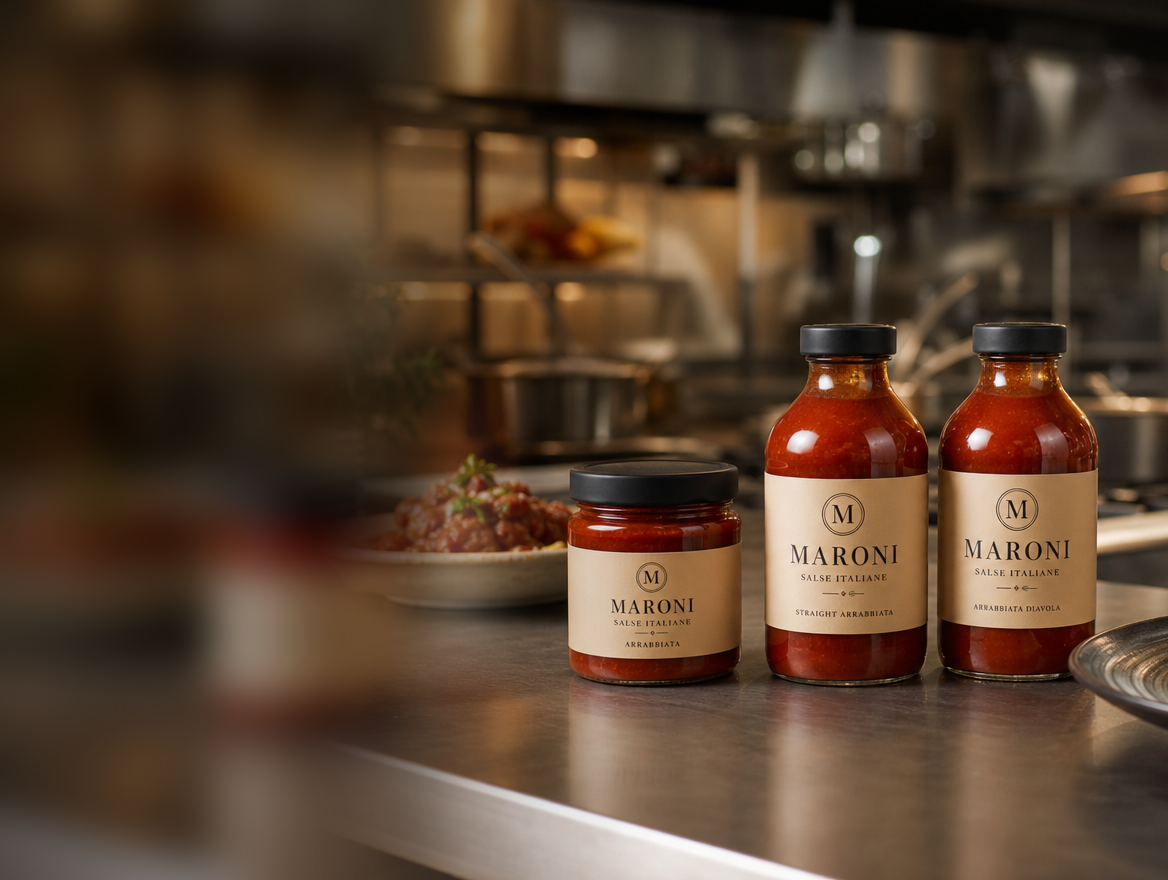
This concept example shows how a sauce or condiment brand can plan a connected packaging range across bottles, jars, closures, labels, cartons and quality requirements. Final specifications depend on product, volume, filling method and market requirements.
A packaging family that makes the range feel connected
A specialty sauce, condiment or food brand wants multiple SKUs to feel like one coherent family. The challenge is to coordinate bottle formats, jar options, closures, label areas, cartons and quality requirements without making the range hard to produce or reorder.

Bottle and jar family
Different formats can share a visual language while serving different product types and volumes.

Closure system
Closure colours, finishes and formats can help identify flavours, ranges or product tiers.

Label and SKU planning
Label area and artwork hierarchy should work across the full range, not just one SKU.

Packing and delivery route
Cartons, palletising and delivery needs are considered before the range moves into production.
One drawing, one packaging family
Sauce ranges succeed when every SKU shares a common vocabulary of formats, closures, label geometry and packing.
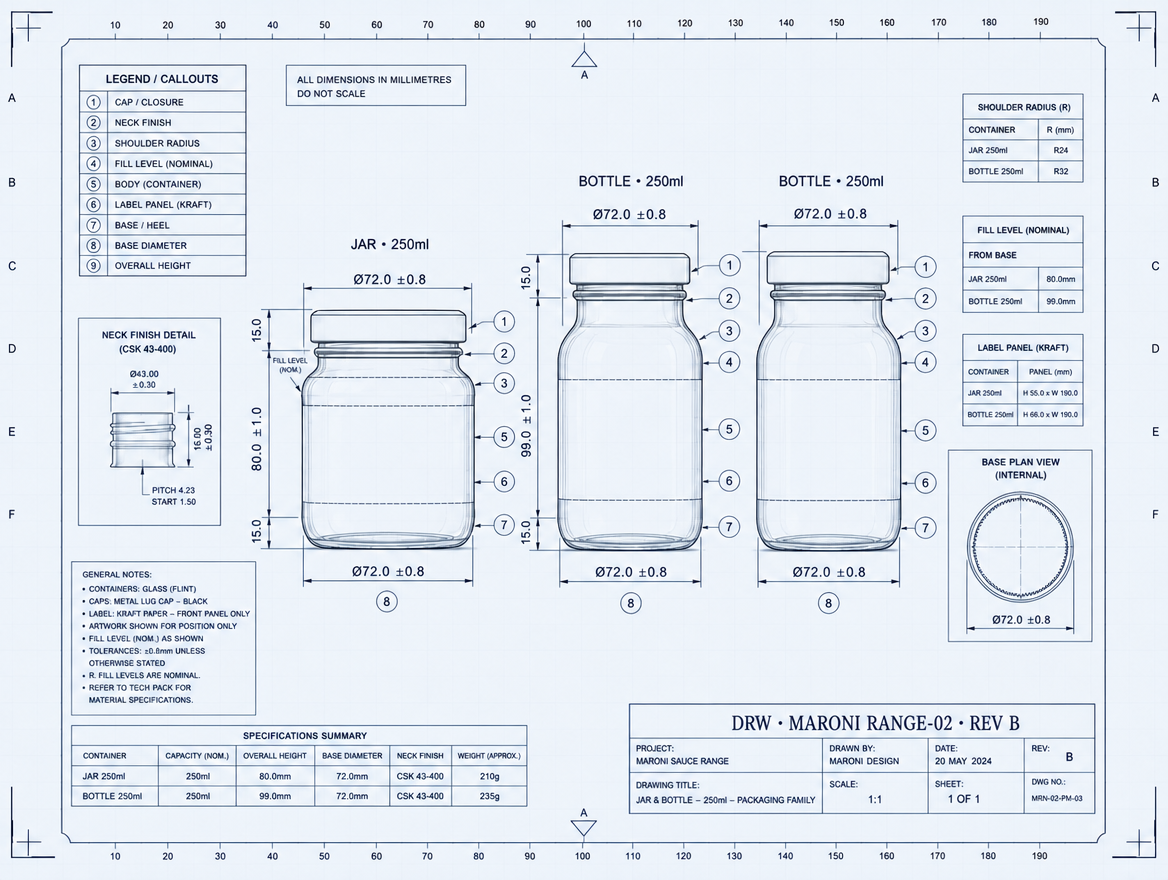
- 1Cap / closure · black screw or lug finish
- 2Neck finish · matched to capping line
- 3Shoulder radius · consistent family profile
- 4Fill line · nominal fill level by SKU
- 5Body · bottle or jar container geometry
- 6Label panel · shared kraft front architecture
- 7Base / heel · stable shelf stance
- 8Overall height and diameter control
Technical drawings and dimensions are illustrative and provided for design-development purposes only. Final specifications are subject to technical review, sampling and production approval.
From recipe range to retail-ready packaging family
A sauce range needs packaging that works across filling, closures, labels, cartons and repeat production, not just one attractive bottle.
- Step 01
Map the SKU range
The buyer shares product types, flavours, viscosities, volumes, target markets and launch priorities.
Phoenix focusProduct range development and packaging brief.01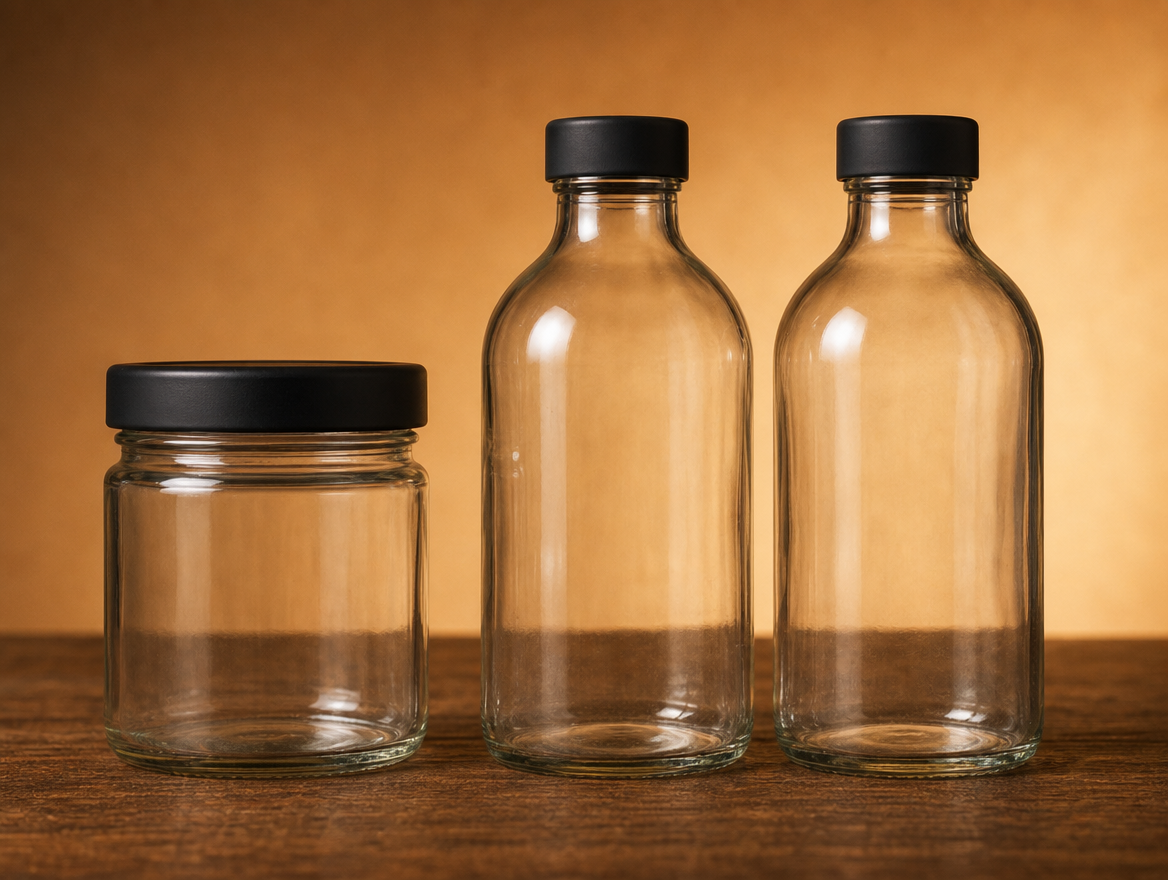 01
01 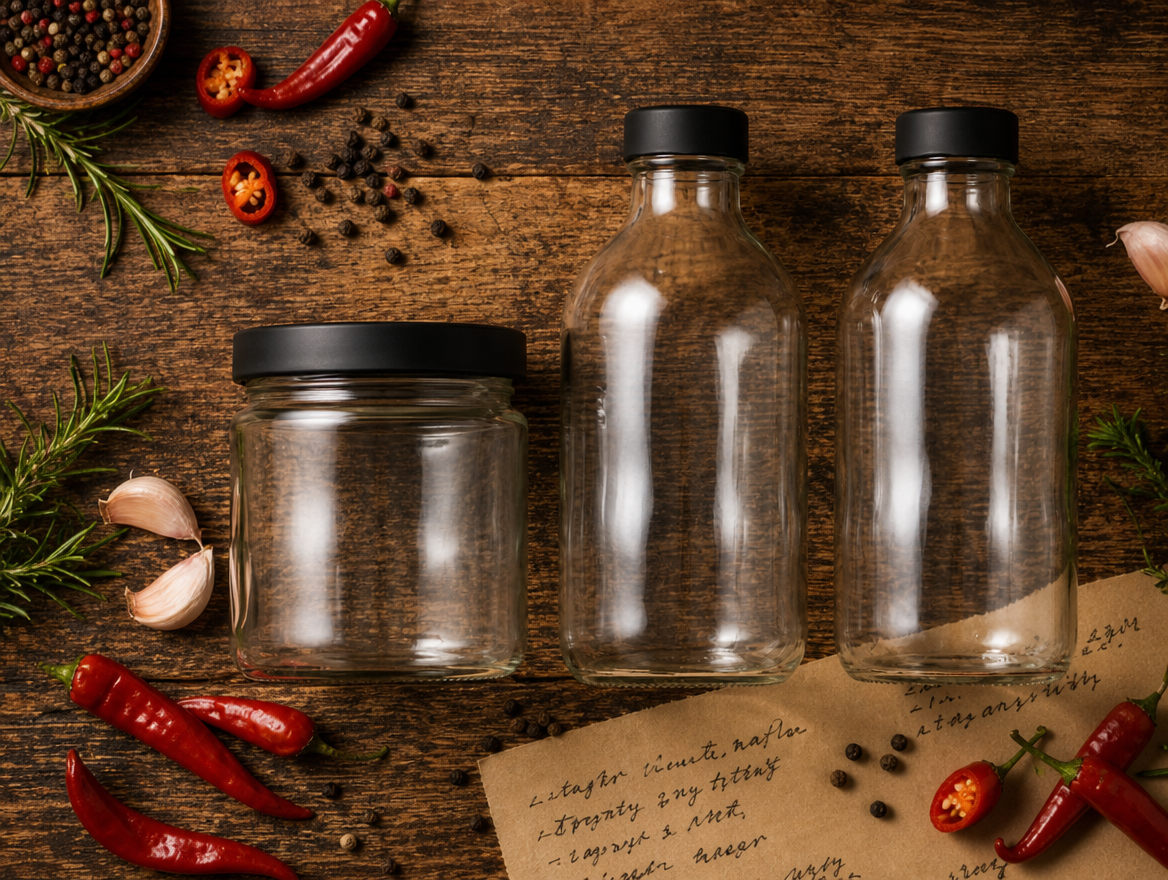 02Step 02
Select bottles, jars and closures
Phoenix helps identify bottle or jar formats, closure options and compatibility requirements for each SKU.
Phoenix focusProduct Range, caps, closures and packaging system coordination.02- Step 03
Build the range identity
The packaging route defines shared shape language, label area, cap colour logic, optional embossing and carton direction.
Phoenix focusCustomisation & Finishes, labels and secondary packaging.03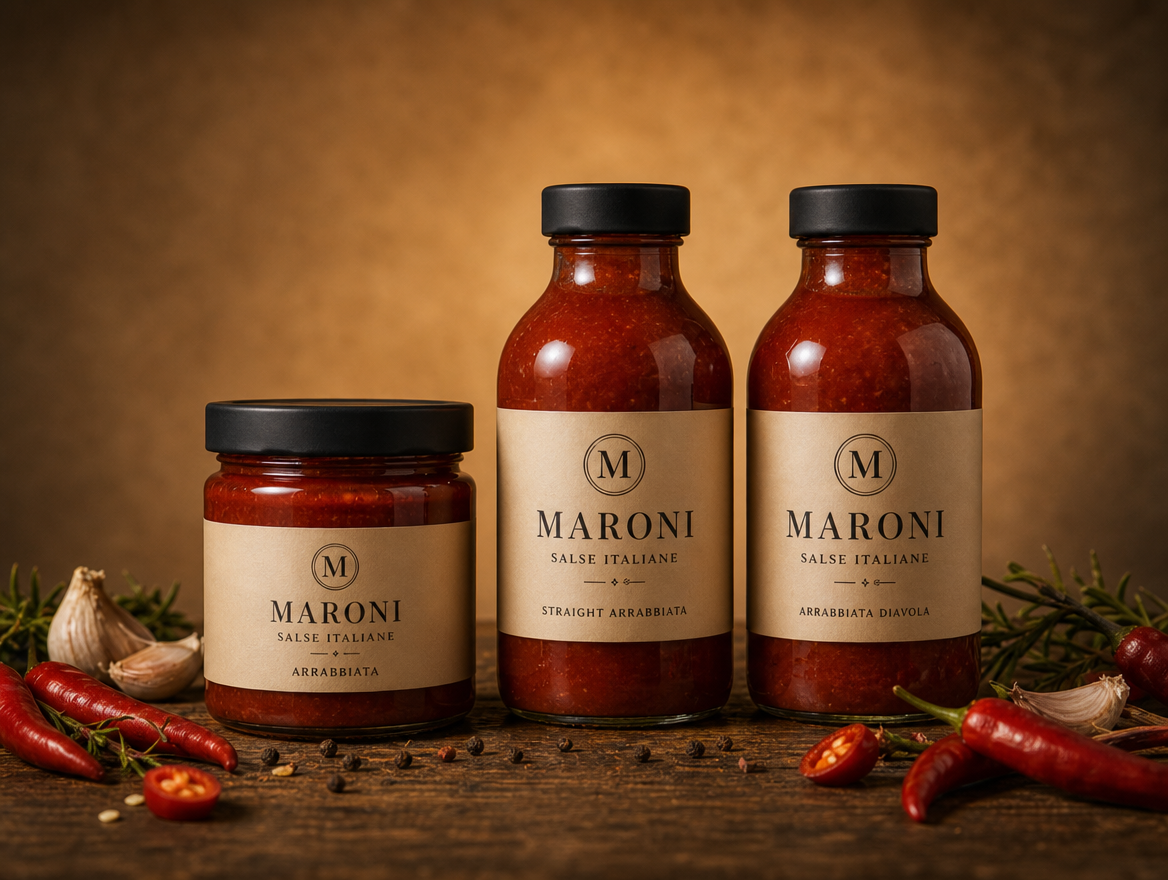 03
03 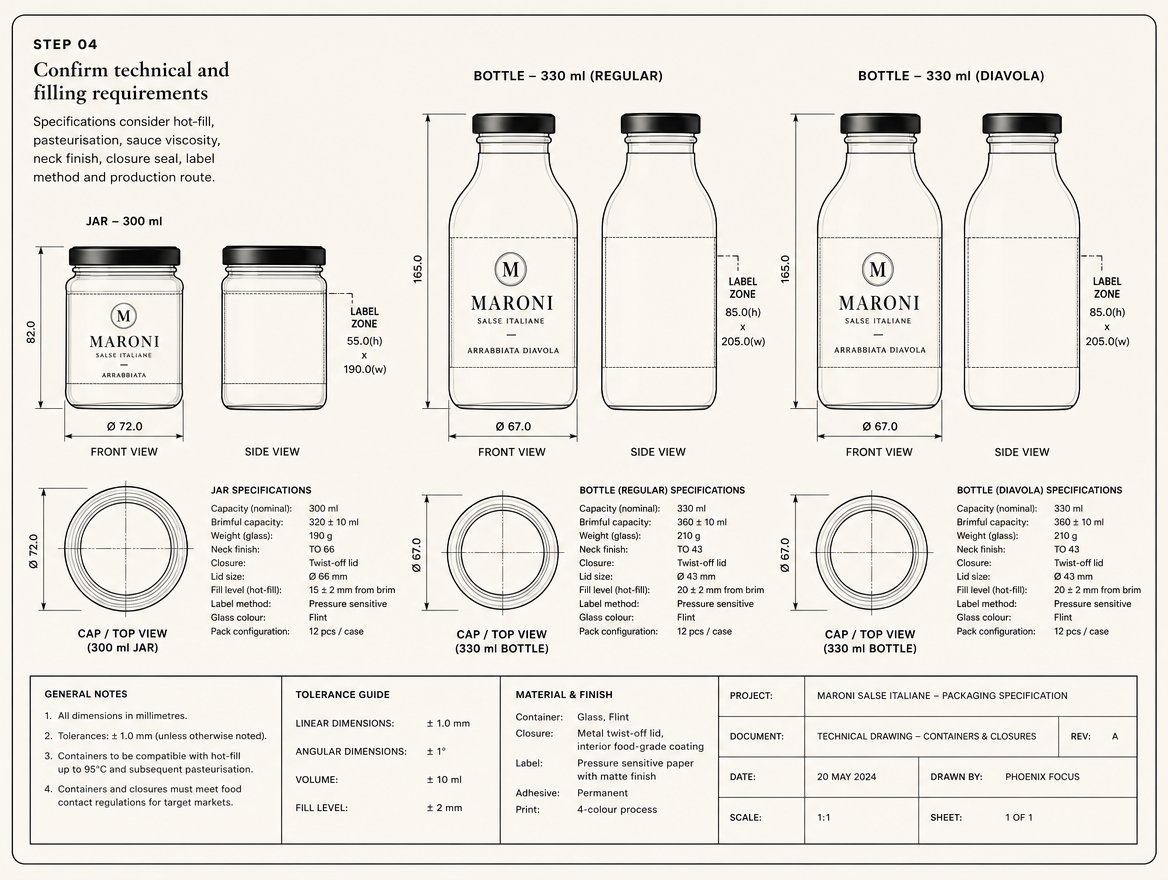 04Step 04
Confirm technical and filling requirements
Specifications consider hot-fill, pasteurisation, sauce viscosity, neck finish, closure seal, label method and production route.
Phoenix focusTechnical Drawing Module and filling / capping considerations.04- Step 05
Quality, packing and documentation
Checks consider thermal shock, closure compatibility, leakage prevention, carton strength, palletising and market documentation.
Phoenix focusQuality Assurance, testing, packing and export support.05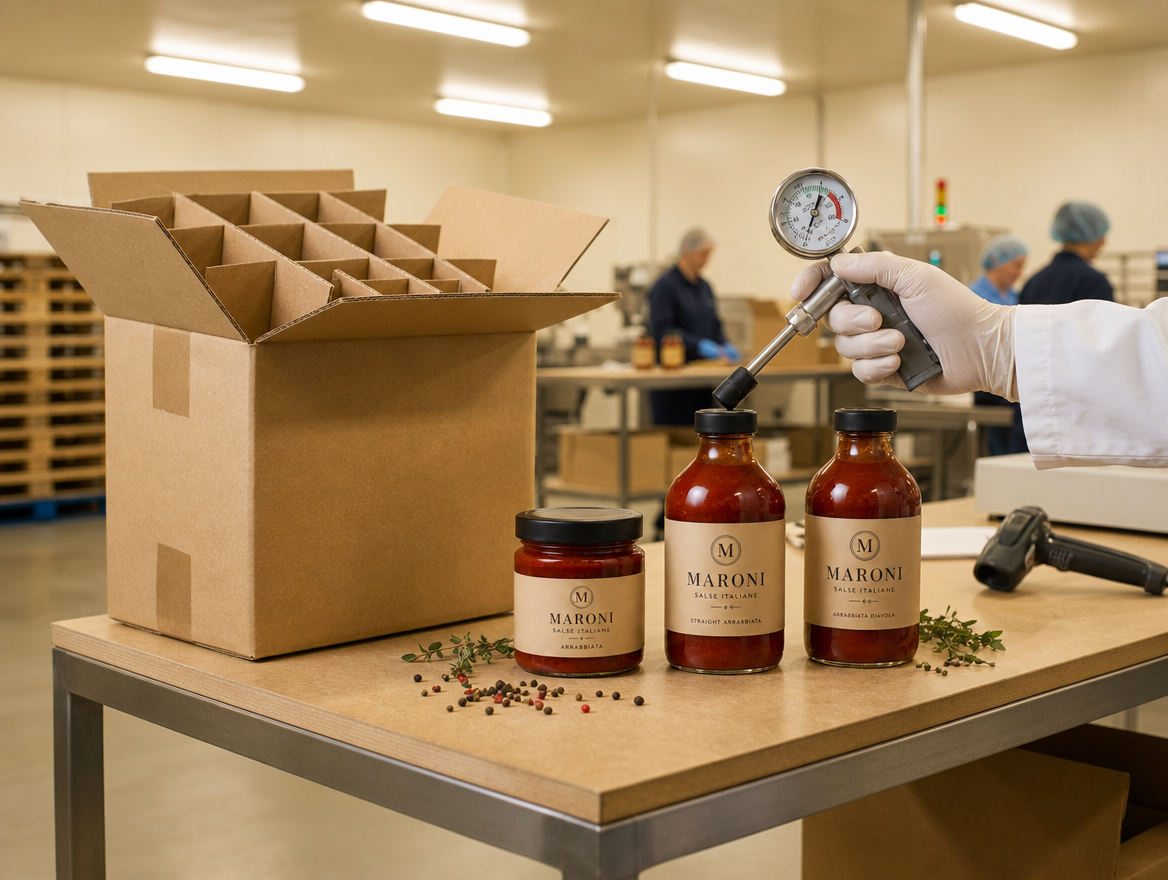 05
05 - 06Step 06
Branded range on shelf
The final packaging route supports a sale-ready family of SKUs with a scalable re-order path.
Phoenix focusMarket-ready packaging, delivery coordination and ongoing range support.06
Specification checkpoints
- Product viscosity
- Hot-fill or pasteurisation needs
- Bottle / jar capacity
- Neck finish and closure fit
- Label area
- Closure colour system
- Carton packing
- Palletising
- Export / local market documentation
Considerations at source
- Thermal shock
- Closure seal
- Leakage prevention
- Internal pressure if relevant
- Label compatibility
- Carton strength
- Packing and palletising
- Batch and delivery documentation
Choices that shape the route
- Number of SKUs
- Bottle versus jar mix
- Closure types and colours
- Label area and artwork hierarchy
- Filling method
- Launch volume and reorder plan
- Local or export market requirements
Planning a sauce or condiment range?
Send your SKU list, product type, target volume or reference packaging. Phoenix will help shape a practical packaging route.
Concept example only. Final specifications depend on product, volume, filling method and market requirements.
Continue exploring
Explore the other example concepts
Each journey shows a different starting point — a reference image, a range brief or a finish direction — translated into a practical packaging route.