
How Much Does a Custom Glass Bottle Mould Cost?
A detailed breakdown of the investment required for custom glass bottle moulds, explaining the key factors that influence cost, from design complexity and cavitation to mould material and expected lifespan.
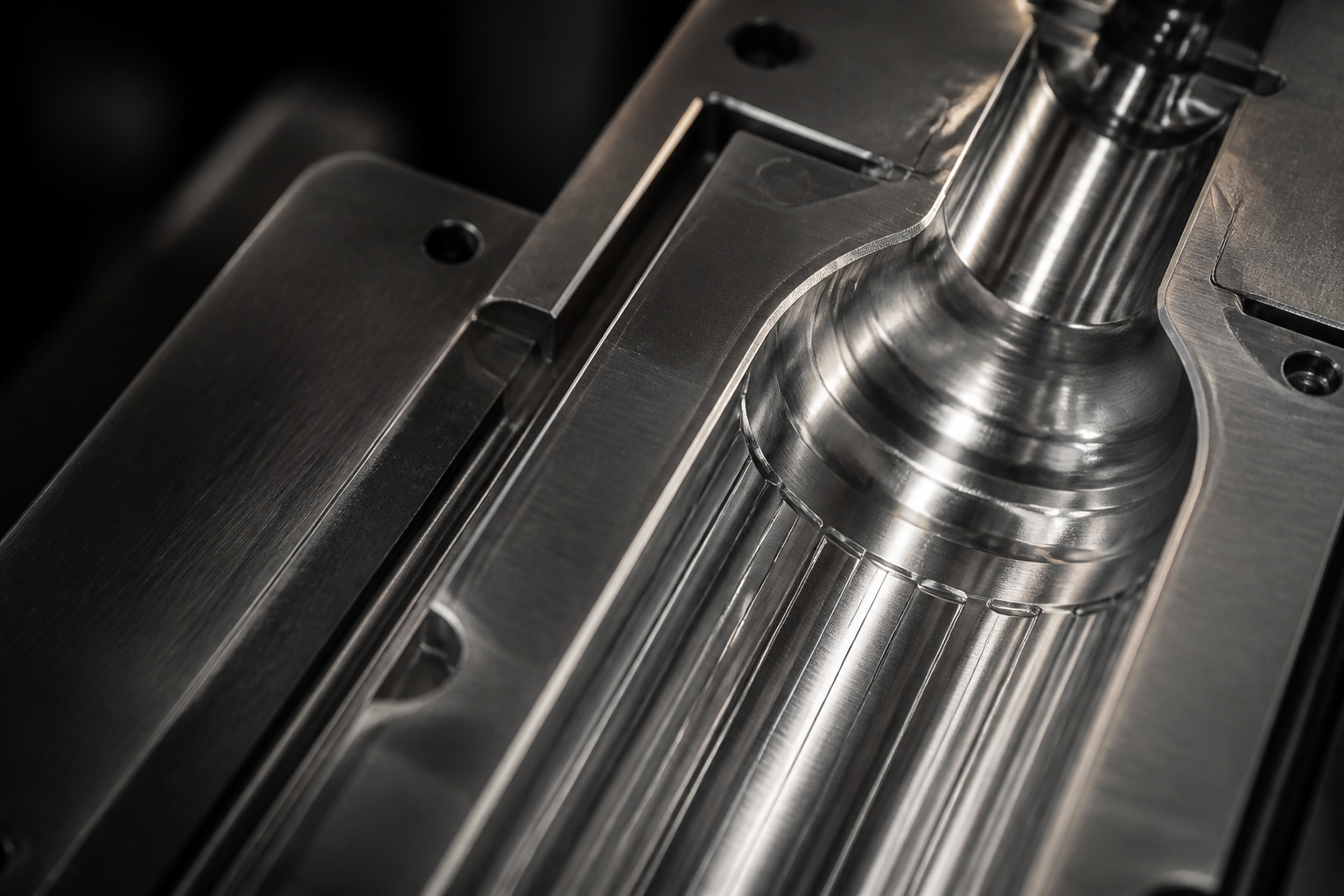
A custom glass bottle mould set is a one-time investment that typically ranges from £5,000 to £25,000 or more. The final cost depends on several factors, including the bottle's design complexity, its size and weight, the number of cavities in the mould set (which dictates production speed), and the material specifications of the mould itself. Simpler, lower-capacity designs are at the lower end, while complex, high-cavitation moulds for large production runs command a higher investment. This is not just for a single mould, but for a complete set of precision-engineered tooling required for automated production.
Investing in a custom mould is a significant commercial decision that secures a unique brand asset. The cost is driven primarily by the complexity of your bottle design and the required production output. A multi-cavity mould set for automated manufacturing is a piece of industrial equipment, not a simple template. The investment should be evaluated against the total volume of units the mould will produce over its lifespan, making the per-unit cost negligible over time. A clear design and volume forecast are essential before commissioning a mould.
- Unique Brand Identity: Your brand requires a proprietary shape that stock options cannot provide.
- Volume Confirmation: You have a production forecast that justifies the upfront mould investment and meets minimum order quantities (MOQs).
- Technical Feasibility: Your design has been reviewed for manufacturability (e.g., draft angles, wall thickness, stability).
- Long-Term Vision: The custom bottle is a core part of your brand strategy, not a short-term promotion.
- Budget Allocation: You have allocated capital specifically for this one-time tooling expenditure.
Why 'Mould Set'? Understanding the Components
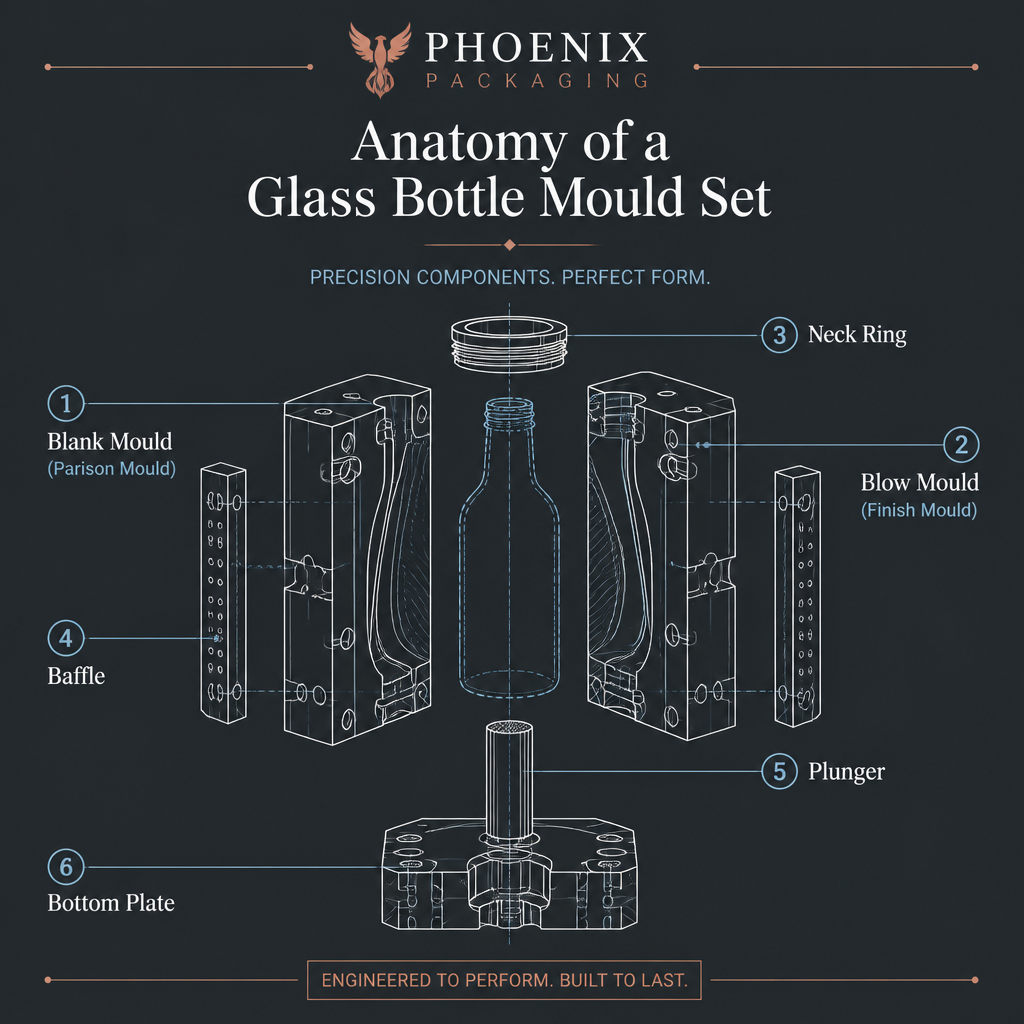
When discussing custom glass packaging, the term 'mould' is shorthand for a 'mould set'. Glass bottles are typically formed in a two-stage process on an Individual Section (IS) machine. This requires a series of components to work in concert to first form a preliminary shape (a parison) and then blow it into its final form. Each component must be precisely machined and synchronised. A typical mould set for a single bottle design includes multiple copies of these components to produce several bottles at once.
Key Cost Drivers for Custom Moulds
The investment in your mould is not arbitrary. It is directly tied to the engineering, materials and machining time required to create tooling that can reliably produce millions of identical bottles to tight specifications. Here are the primary variables that determine the final cost.
| Factor | Low-Cost Scenario | High-Cost Scenario | Commercial Rationale |
|---|---|---|---|
| Bottle Complexity | Simple, round or square shape with minimal surface detail. | Asymmetrical shape, intricate embossing/debossing, sharp angles. | Complex geometries require more advanced CAD/CAM work, slower machining, and potentially split moulds, increasing engineering and manufacturing time. |
| Mould Cavities | Single or double gob (fewer cavities). Suitable for smaller runs. | Triple or quad gob (more cavities per set). For high-volume production. | More cavities mean higher output per machine cycle, but require a larger, more complex, and more expensive initial mould set. |
| Bottle Size & Weight | Small capacity bottle (e.g., 50ml) with a lower glass weight. | Large capacity bottle (e.g., 1L spirit bottle) with a high glass weight. | Larger bottles require physically larger and heavier mould components, consuming more raw material (specialised cast iron or bronze) and machining time. |
| Mould Material & Coating | Standard cast iron for moderate production volumes. | High-grade bronze alloys or specialised coatings for critical areas (e.g., neck ring). | Premium materials offer better thermal conductivity, wear resistance, and longer life, justifying a higher upfront cost for very large or continuous production runs. |
Model Your Custom Mould Investment
Ready to move from a stock bottle to a unique brand asset? A clear brief is the first step. Let's discuss your design, volume requirements, and project timeline.
Sources used in this article
- 1
- 2ISO 9001:2015 Quality Management SystemsInternational Organization for Standardization
- 3
Frequently asked questions
What is the typical lifespan of a glass bottle mould?

A standard cast-iron mould set has a typical lifespan of approximately 8-12 million bottles, depending on the complexity of the design and the production environment. The neck ring and blank mould often wear faster and may need replacement or repair during the mould's life. Regular maintenance can extend this lifespan significantly.
Is the mould cost separate from the unit price per bottle?
Yes. The mould cost is a one-time capital expenditure for tooling. The unit price per bottle is a separate, ongoing cost that covers raw materials, energy, production, and quality control for each glass bottle produced using your mould.
Does Phoenix Packaging own the mould, or do I?
The custom mould set is your asset. You, the client, own the mould. Phoenix Packaging manages the procurement, commissioning, and maintenance of the mould on your behalf at the certified production facility. This ensures it is used exclusively for your production and is properly stored and maintained.
Can I use my mould at different glass factories?
Technically, yes, as you own the mould. However, it's commercially and technically complex. Moulds are engineered for specific IS machines and factory setups. Moving a mould requires significant logistical effort, recalibration, and potential modification, which can lead to production delays and additional costs. It is most efficient to keep the mould at its commissioned facility.
Have a packaging brief?
Tell us your product, target volume and launch market — we'll come back with a route that fits.
Keep reading
What Drives Glass Bottle MOQ? A Guide for Brands
Minimum order quantities for glass bottles are primarily driven by the high fixed costs and operational demands of glass manufacturing. Learn what dictates MOQs and how to plan for them effectively.

How to Plan a Short-Run Glass Packaging Project Without Overcommitting Inventory
A practical guide to planning volumes, mould decisions, samples, approvals and timelines before scaling production.