
How to Plan a Short-Run Glass Packaging Project Without Overcommitting Inventory
A practical guide to planning volumes, mould decisions, samples, approvals and timelines before scaling production.
A short-run glass packaging project works best when you separate launch learning from scale production. Start by defining the product, target quantity, closure, filling method, market requirements and approval steps before committing to larger inventory.
- You are testing a new SKU or seasonal range.
- You need 5,000 to 10,000 units rather than large-scale inventory.
- Packaging needs to support a premium shelf position.
- You need the bottle, closure and carton to work together.
- You may scale later, but need to validate demand first.
Quick answer
For most brands, short-run glass packaging is useful when the project needs market validation before large-volume production. It is especially relevant for new SKUs, seasonal ranges, export trials, premium sauces, oils, coffee, spirits and wellness products where packaging matters, but demand is not yet proven.
The weak way to plan a short run is to ask suppliers for “the cheapest bottle at the lowest quantity”. A stronger approach is to define the packaging job first: what the bottle or jar needs to hold, how it will be filled, how it will be capped, what market it will enter, what quality documentation is required, and what level of distinctiveness the brand needs.
| Decision | Why it matters | What to prepare | Best next step |
|---|---|---|---|
| Target quantity | Shapes MOQ, unit economics and production route. | Launch quantity, reorder expectation and forecast range. | Confirm a realistic pilot volume before requesting quotes. |
| Bottle or jar format | Affects filling, capping, labelling, packing and shelf presence. | Product type, fill volume, viscosity and target use case. | Shortlist 2–3 candidate formats to sample. |
| Closure choice | Cap and glass must work together as a system. | Seal requirement, opening style, tamper evidence and cap preference. | Match closures to neck finishes before approving artwork. |
| Custom mould | Creates distinction, but adds cost and approval steps. | Sketches, dimensions, reference packaging and brand objectives. | Decide stock vs custom early; lock the brief in writing. |
| Quality & compliance | Export and food-grade projects need clearer documentation. | Target market, certification needs and inspection expectations. | Align inspection plan and documentation up front. |
Why short-run glass is not just a smaller big order
Short-run production is not just “a smaller version of a big order”. The risk profile is different. A large production run rewards efficiency and repeatability. A short run is usually trying to answer a commercial question: will this SKU work, will the market respond, will the packaging perform on the line, and will the product survive distribution?
That is why Phoenix Packaging treats short-run projects as packaging planning exercises, not just bottle sourcing. The bottle, cap, label, carton, filling method, quality checks and delivery plan all need to fit together. You can explore Phoenix’s wider end-to-end packaging capability if the project needs more than glass supply alone.
Step 1: Decide what the short run is meant to prove
Before choosing a bottle, decide what the launch is testing. A short-run glass packaging project normally sits in one of four categories:
- Market trial: testing demand before committing to scale production.
- Seasonal or limited edition: launching a temporary SKU where overstock would be painful.
- Premium repositioning: upgrading packaging to test a higher-value shelf proposition.
- Export trial: preparing an initial shipment for a new regulated or distributor-led market.
Each use case changes the right packaging decision. A market trial may prioritise speed and cost control. A premium repositioning may justify custom glass, surface finishes or embossing. An export trial may require stronger attention to documentation, palletising and quality inspection.
Step 2: Start with the product, not the bottle
The product determines the packaging constraints. Sauce, oil, coffee, spirits and supplements do not behave the same way. A chilli sauce may need a closure and neck finish that suits viscosity and filling. Sesame oil may need a bottle that communicates quality while protecting against leakage and handling issues. Coffee and specialty foods may rely more heavily on jar form, closure feel and shelf presentation.
For food and beverage brands, the packaging should balance shelf appeal, food safety and reliable supply. The same logic applies to export-ready products, where packaging also has to survive freight, customs handling and distributor storage. Phoenix’s quality and testing process shows how inspection supports the final delivery.
Step 3: Choose stock glass, custom glass or a phased route
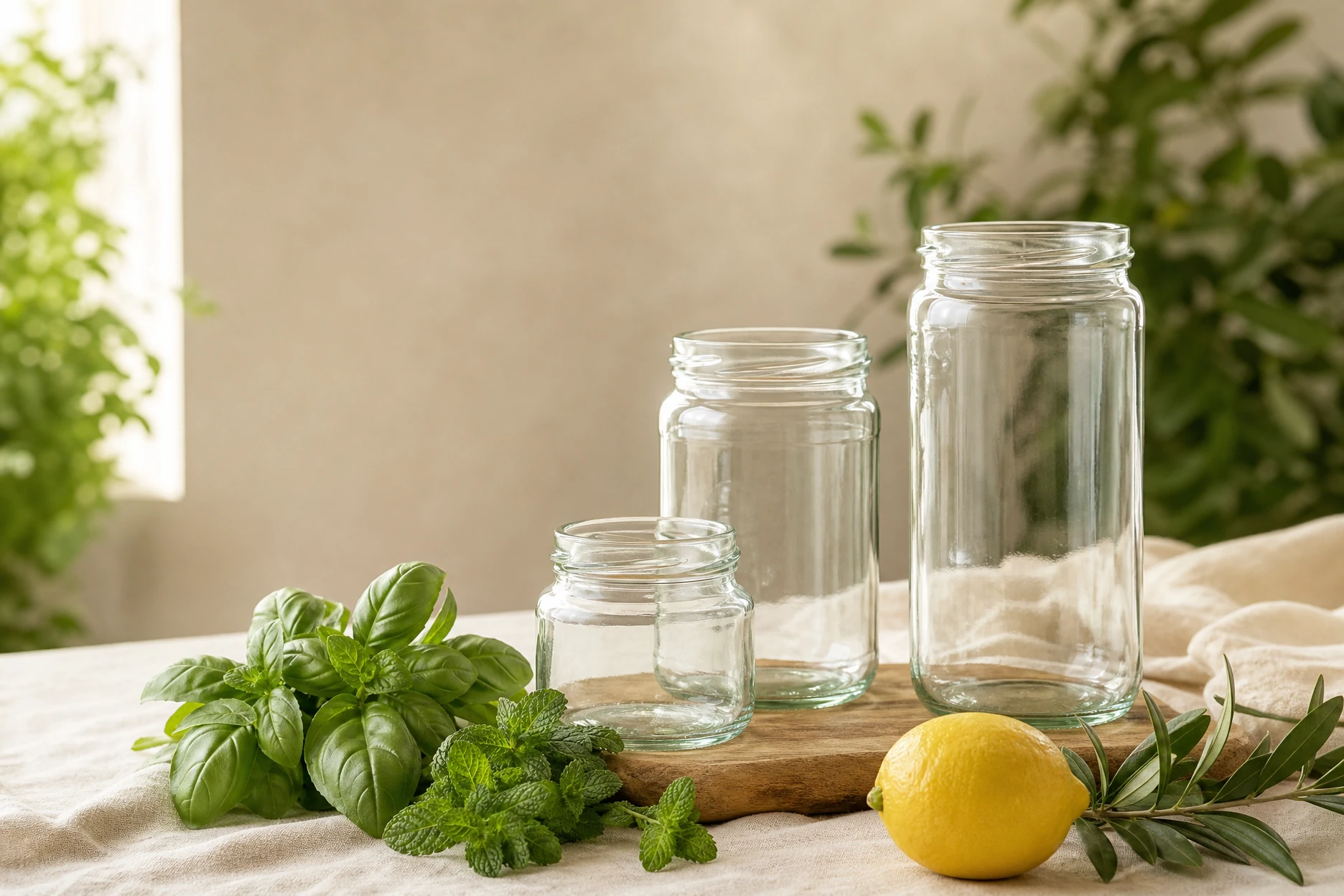
Stock glass can be the right answer when speed, simplicity and cost control matter more than distinctiveness. Custom glass becomes more relevant when the packaging needs to support the brand proposition, solve a functional problem, improve shelf presence or create a proprietary format competitors cannot easily copy. For many short-run projects the most useful answer is a phased route.
| Option | Best for | Trade-off | Use when |
|---|---|---|---|
| Stock glass | Fast trials and simple launches where standard formats are acceptable. | Less distinctiveness and less control over structural identity. | Speed and unit economics matter more than ownership of the bottle. |
| Custom glass | Premium launches, brand refreshes and proprietary export positioning. | Requires clearer design decisions, mould planning and approval steps. | Packaging is part of the shelf proposition or competitive moat. |
| Phased approach | Brands that want to validate first and own the format later. | Two design conversations instead of one; needs a credible long-term plan. | Demand is unproven but a proprietary direction is already on the roadmap. |
Stock glass route
For fast trials where standard formats are enough. Best when speed and simplicity matter more than distinctiveness on shelf.
Custom glass route
For launches where the bottle or jar needs to carry the brand proposition. Best when packaging is part of the shelf strategy.
Phased route
Start with stock or semi-custom choices, then move to proprietary glass once demand is clearer. Best when protecting cash while keeping a custom path open.
Step 4: Treat the closure as part of the system
A short-run glass project can fail because the closure was treated as an afterthought. The cap, seal and neck finish need to work with the product, filling line, shelf-life requirement and customer experience. A beautiful bottle with the wrong closure is not a packaging solution — it is a future complaint.
For food brands, common closure questions include whether to use a lug cap, screw cap, flip-top, snap-on closure or roll-on tin closure. The right answer depends on the product, filling process and required seal performance.
Step 5: Build in quality and documentation early
Short runs do not remove the need for quality control. If anything, they make quality more visible because the launch is often being watched closely by founders, brand teams, distributors or export partners.
For food packaging, FSSC 22000 is relevant because its packaging manufacturing scope can apply to primary and secondary food and feed packaging, including glass jars and bottles. ISO 9001 is also relevant as a quality management system standard. Use those references carefully and do not imply certification unless the relevant plant genuinely holds it for the project.

Step 6: Plan the approval path before production
The approval path should be simple enough to follow, but detailed enough to prevent mistakes. A practical short-run approval sequence usually includes:
- Confirm product type, fill volume and target quantity.
- Choose stock or custom glass direction.
- Confirm closure and seal requirements.
- Review technical drawings or sample references.
- Check labelling, carton and palletising requirements.
- Confirm inspection expectations and documentation.
- Approve the quote, timeline and production route.
Where the project may later scale, do not optimise only for the first order. Make sure the selected bottle, jar, closure and carton can support the second and third order as well.
Common mistakes to avoid
Choosing only on unit price
A lower unit price can become expensive if breakage, leakage, defects or relabelling appear later.
Leaving the closure too late
Closure compatibility belongs in the first conversation, not the last. The cap is part of the bottle, not an accessory.
Ordering too much before demand is proven
Short runs exist to protect learning. Over-ordering removes that advantage and ties up cash on unproven packaging.
Treating export as a domestic shipment
Regulated markets may require documentation, testing and packaging decisions a domestic launch never has to handle.
Customising without a commercial reason
Custom design should support brand, function or commercial positioning — not exist for its own sake.
Forgetting carton and palletising
How the bottle ships is part of the bottle decision. Carton, divider and pallet patterns belong in the brief.
How Phoenix helps short-run projects move forward
Phoenix coordinates bottle, closure, decoration, quality and logistics through one accountable team, so a short run is not stitched together from disconnected suppliers. We help brands choose between stock, semi-custom and proprietary glass, plan inspection up front, and design a packaging system that can carry the SKU from pilot through to scale.
Sources used in this article
- 1FSSC 22000 Packaging ManufacturingFSSC
Used to frame food-grade packaging certification context for glass jars and bottles.
- 2ISO 9001:2015 Quality Management SystemsISO
Referenced as a baseline quality management standard relevant to packaging manufacturers.
- 3Why Choose Glass?FEVE
Industry reference on the material properties that make glass a credible premium packaging choice.
Frequently asked questions
What is a realistic MOQ for short-run glass packaging?

For Phoenix projects, short-run flexibility is typically discussed around 5,000 to 10,000 units, depending on the product, packaging format, production route and project requirements.
Should I use stock glass or custom glass for a new SKU?
Use stock glass when speed and simplicity matter most. Consider custom glass when the packaging needs to strengthen shelf presence, support a premium position or create a proprietary brand asset.
Do caps and bottles need to be tested together?
Yes. A bottle and closure should be treated as a system. The right cap depends on the neck finish, product type, filling process, seal requirement and customer use case.
Can a short-run project still be export-ready?
Yes, but export-readiness should be planned from the start. Packaging for export may need stronger attention to certification, inspection, palletising, breakage risk, documentation and freight handling.
Have a packaging brief?
Tell us your product, target volume and launch market — we'll come back with a route that fits.
Keep reading
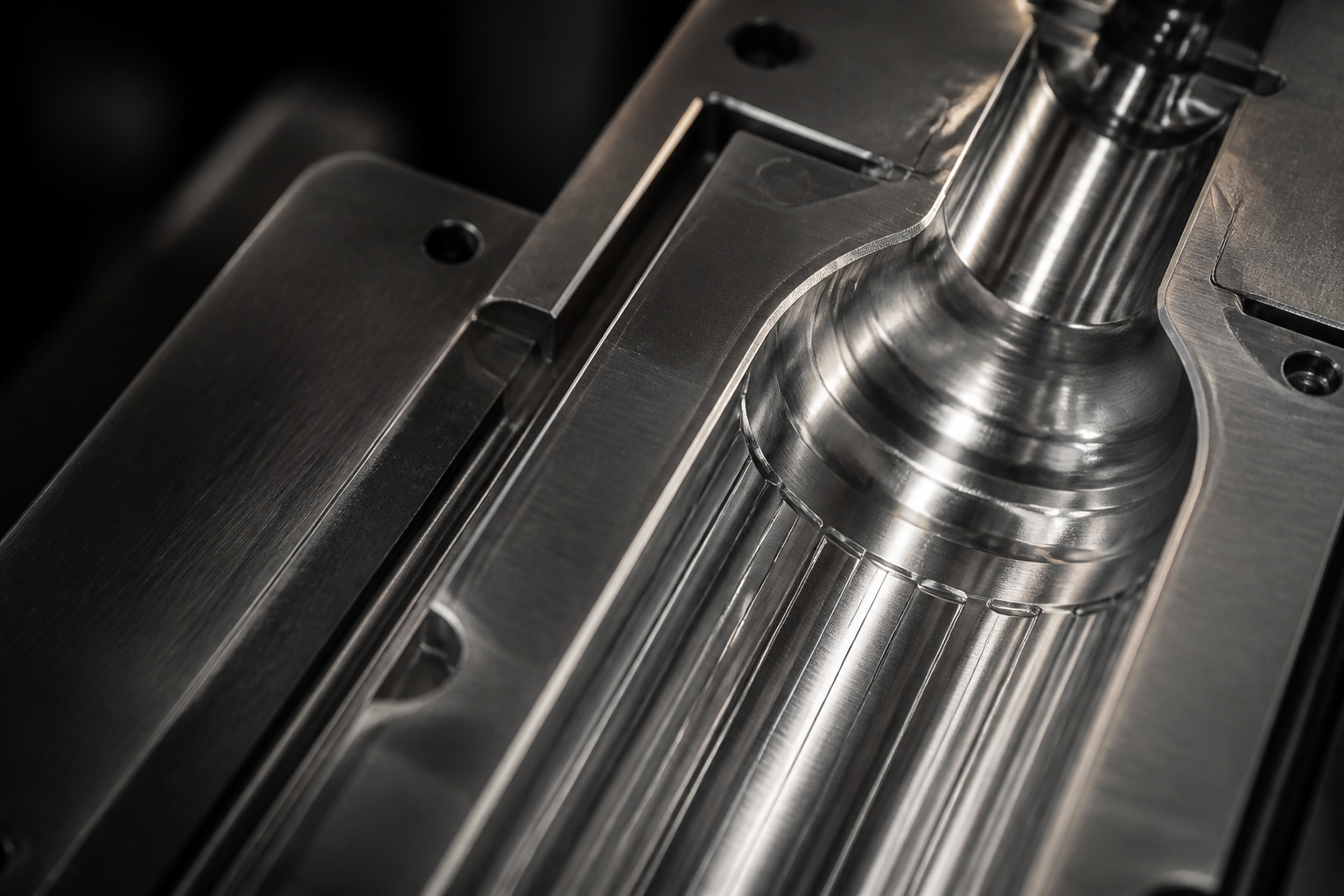
How Much Does a Custom Glass Bottle Mould Cost?
A detailed breakdown of the investment required for custom glass bottle moulds, explaining the key factors that influence cost, from design complexity and cavitation to mould material and expected lifespan.


What Drives Glass Bottle MOQ? A Guide for Brands
Minimum order quantities for glass bottles are primarily driven by the high fixed costs and operational demands of glass manufacturing. Learn what dictates MOQs and how to plan for them effectively.